
How a Shopify Quiz Funnel Converts Cold Traffic a Product Page Cannot
A Shopify quiz funnel converts cold traffic because it replaces a decision with a diagnosis: instead of asking a stranger to browse your catalogue and guess which of a dozen products is theirs, it asks four or five questions and hands them one answer with a reason attached. That is the entire mechanism, and it works precisely because a product page cannot do it. A product page assumes the visitor already knows what they want. Cold traffic rarely does. This guide covers how many questions to ask, what each one has to earn before it belongs in the flow, where email capture should sit, how to make the result read like a recommendation rather than a redirect, and how to avoid the failure mode most quiz apps ship with by default: five questions that recommend the same product to everyone.
Gyllion Redout · September 15, 2026
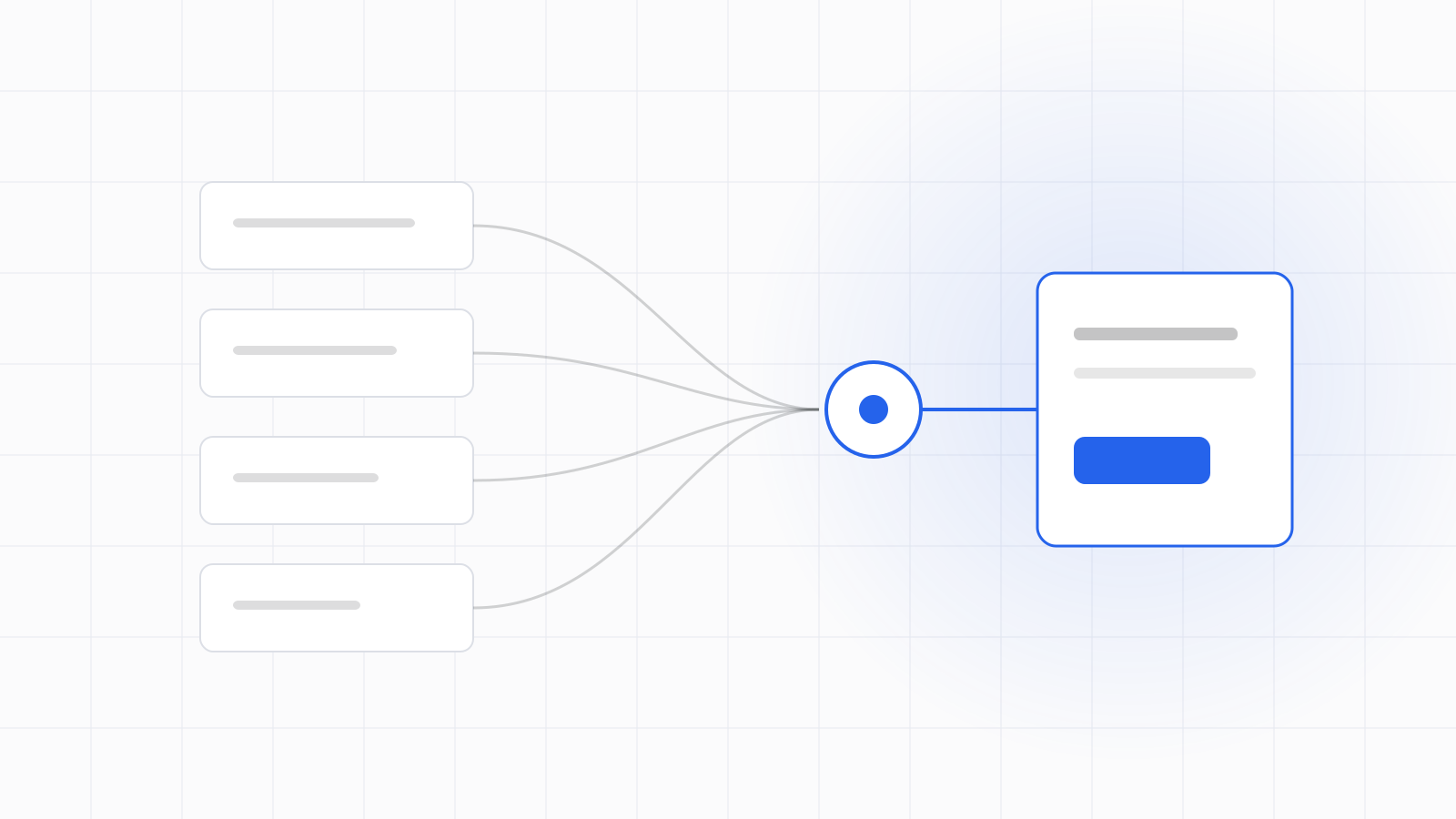
Why does a Shopify quiz funnel convert cold traffic a product page cannot?
A Shopify quiz funnel converts cold traffic because it removes the one thing a stranger arriving from an ad has not yet done: choose confidently from a full catalogue. A product page is built for someone who already decided what they want and typed it into a search bar or clicked a specific ad. Cold traffic has not decided anything yet, so the same page reads as a wall of options rather than an answer.
The quiz reframes that catalogue as a small number of forced choices instead of one open ended browse. Each question narrows the field by one attribute the visitor actually cares about, skin type, budget, use case, and by the final question the field has narrowed to one product the visitor can trust was chosen for them rather than pulled from a bestseller list.
That shift in effort is the whole value. Browsing a catalogue is work the visitor has to do alone, with no guidance and no reason to trust any one product over another. Answering four short questions is work the visitor does with the store, and the store hands back a specific answer at the end. Cold traffic converts on the second version far more often than the first, because a diagnosis reads as considered and a catalogue reads as a guess.
How many questions should a Shopify quiz funnel ask?
Ask enough questions to actually narrow the field, and stop the moment an extra question stops changing the outcome. In practice that usually lands between three and six questions: three is often too few to tell two similar products apart with real confidence, and past six or seven the flow starts to feel like a form the visitor is filling out rather than a conversation about what they need.
The right count depends on how many meaningfully different products you are sorting between, not on a fixed rule. A catalogue with three clear use cases might resolve confidently in three questions. A catalogue with overlapping variants, different strengths, different skin types, different budgets, needs more questions to avoid two very different visitors landing on the same recommendation for different reasons.
Test the count the same way you would test anything else. Watch where visitors abandon the quiz, and watch whether the final recommendation actually varies across real visitor sessions. A quiz that always lands on the same product regardless of question count has a logic problem, not a length problem, and adding more questions will not fix it.
- Three questions: enough for a small catalogue with clearly distinct products
- Four to six questions: the working range for most guided selling quizzes
- Seven or more: only when each one narrows the field in a way fewer questions cannot
What must every question earn before it belongs in the quiz?
Every question in a Shopify quiz funnel has to narrow the recommendation and be answerable in a few seconds, or it does not belong in the flow. A question that every visitor answers the same way tells you nothing and costs you a screen of attention you cannot get back. A question that takes real thought to answer breaks the pace a quiz depends on to feel effortless.
The cleanest test is removal. Take the question out and ask whether the final recommendation would ever change because of it. If the answer is no for every realistic combination of the other answers, the question is decorative, and decorative questions are exactly what makes a quiz feel like a survey instead of a diagnosis.
Personality style filler questions are the most common offender: which of these images speaks to you, what is your morning routine. They feel on brand and they add nothing to the recommendation logic unless the answer genuinely maps to a product attribute. A question about skin type earns its place because it changes the answer. A mood board question usually does not.
- Narrows the field: a different answer leads to a different outcome
- Quick to answer: no question should require the visitor to think hard
- Maps to a real catalogue attribute, not a vibe with no product behind it
- Survives the removal test: taking it out would change some recommendations
Where should email capture sit in a Shopify quiz funnel?
Email capture belongs after the questions and before the reveal, not on the first screen. Asking for an email before the visitor has answered anything asks for something before you have earned anything, and it turns a quiz that felt like a light conversation into a form with a paywall on the interesting part.
The moment right before the result is the strongest spot because curiosity is at its highest and the sunk cost of the last few answers is real. The visitor has already invested thirty seconds; handing over an email to see what that investment produced is a small ask compared to starting cold. Reveal the result immediately after, so the exchange feels fair rather than delayed for its own sake.
Placement matters more than whether email capture exists at all. A quiz funnel builder that only lets you bolt the field onto the front screen forces the weakest version of this exchange, while one that lets you place capture at the natural point in the flow, right before the answer, keeps the sequence a visitor actually completes instead of abandons.
How do you make the result feel like a recommendation instead of a redirect?
A quiz result feels like a recommendation when it states a reason tied directly to the visitor's own answers, and it feels like a redirect when it does not. Because you said your skin runs dry and you are focused on fine lines is a recommendation. Check out our bestseller is a redirect wearing a quiz's clothing, and visitors notice the difference even when they cannot name it.
The reason has to reference the actual answers given, not a generic template sentence that could follow any quiz path. A guided selling quiz that shows the same explanatory copy regardless of which answers were selected has not built a recommendation engine, it has built a five question detour to one page.
Grounding the result in real product data closes the loop. The recommendation should show the product's real title, its real image, and its real price, pulled from the catalogue rather than typed once and left to go stale. A result that points at a product that is out of stock, discontinued, or renamed since the quiz was built breaks the trust the whole funnel was built to earn.
How do you avoid the quiz that recommends the same product to everyone?
You avoid it by testing every realistic answer path before launch, not just the one you had in mind when you built the quiz. The most common failure in a homemade quiz funnel builder is logic that technically branches but functionally collapses: every path was wired, by mistake or by habit, back toward the owner's favorite product, and nobody noticed because nobody walked the other paths.
This happens quietly. A store owner builds the quiz around the product they want to push, writes questions that sound neutral, and sets every branch to end at that product because it was the only one they mapped carefully. The other products in the catalogue exist in the store but never in the quiz's actual logic, so the quiz behaves like a five question advertisement for one item.
The fix is grounding the recommendation logic in your live catalogue rather than a static list you wrote once. When the mapping pulls from real product attributes, price tier, use case, category, a new product entering the catalogue changes what the quiz can recommend automatically, and a lopsided result shows up as a data problem you can see and fix rather than a bias baked silently into the code.
- Every answer combination has been walked at least once before launch
- More than one product actually appears as a possible result in testing
- The stated reason changes when the underlying answers change
- Results are checked against live inventory, not a list written once and forgotten
Which approach should you use to build the quiz: an app, a form tool, or a generator?
Choose based on how much of the logic you are willing to write and maintain yourself, because that is the real difference between the options, not the visual polish of the quiz screen itself. A dedicated Shopify quiz app gives you the interface and the delivery, a general form tool gives you the interaction design, and a generator built on your own catalogue gives you the mapping between answers and products without you writing it.
The maintenance question matters more once the quiz is live than it does on launch day. A catalogue changes: products sell out, new variants launch, prices move. A quiz whose logic was hand written once has to be hand updated every time, and in practice it usually is not, which is how a working quiz funnel builder quietly turns into the same broken quiz this article just described.
Whichever route you take, judge it against the same standard: does every question earn its place, does the email ask sit at the point of highest curiosity, does the result read as a reason rather than a redirect, and does the underlying logic stay accurate as your catalogue changes without you rebuilding it by hand.
How this compares to the tools you are weighing
Octane AI
- What it does well
- Octane AI is a purpose built Shopify quiz app with a polished visual quiz editor and native integration into Shopify checkout and email platforms.
- Where it stops
- It gives you the quiz interface and the delivery mechanics, but the questions, the answer logic and the product mapping are still yours to write and to keep current as your catalogue changes.
- What Zyberon does instead
- Zyberon generates the questions, the answer paths and the product recommendations directly from your live Shopify catalogue and brand profile, so a new product gets a working quiz path without you rewriting any logic by hand.
Typeform
- What it does well
- Typeform is a general purpose survey and form builder with some of the most refined interaction design of any form tool on the market.
- Where it stops
- It has no concept of your Shopify catalogue, so mapping a visitor's answers to an actual product and price is a manual logic build you maintain yourself, usually through a separate automation tool.
- What Zyberon does instead
- Zyberon's quiz builder reads your live store catalogue directly, so every recommendation points at a product that actually exists, with its real title, image and price, without a separate integration step.
A custom Shopify theme section
- What it does well
- Building the quiz as a theme section gives you full control over the exact markup, styling and checkout handoff, with no new app or subscription added to your store.
- Where it stops
- Every question, branch and product match has to be written and tested by hand, and the logic goes stale the moment you add or retire a product, since nothing keeps it in sync with your catalogue.
- What Zyberon does instead
- Zyberon rebuilds the quiz from your live product picker whenever you point it at a new product, so recommendations reflect your current catalogue instead of a list somebody typed once and left to age.
Questions this raises
Does a Shopify quiz funnel replace my product pages or work alongside them?
It works alongside them. The quiz recommends a product, and that recommendation still lands on a normal product page to close the sale, so the two are complementary rather than a replacement for each other.
Should a quiz ask for an email before or after showing the result?
After the questions but before the reveal is the strongest spot, because the visitor has already invested effort and is curious about the answer but has not received it yet. Asking first, before any question, requests information before you have earned any trust.
Can a quiz funnel work for a small catalogue with only a few products?
Yes, though each question has to work harder to feel meaningful. A product recommendation quiz on a small catalogue needs every question to map to a real difference between the products rather than a generic preference question that would sort visitors the same way regardless of the answer.
What is the biggest reason a quiz funnel fails to convert?
The most common reason is a result that reads as generic: a recommendation with no stated reason, pointing at whichever product the store favors rather than the one the answers actually support. A visitor who suspects the quiz was decorative stops trusting the next one.
Do I need a developer to build a quiz funnel for Shopify?
Not necessarily. A dedicated quiz app or a generator built on your catalogue can produce a working funnel without custom code, though a hand built theme section gives the most control at the cost of doing the logic and the upkeep yourself.
Read next
How Advertorial Landing Pages Earn the Click for Shopify
How advertorial landing pages earn the click a product page assumes: the structure that works, the compliance line to respect, and when to use one.
How to Automate Shopify Customer Support Without Losing Trust
A practical guide to how you automate Shopify customer support with AI: which tickets to hand over first, how to encode policies, and where humans stay in the loop.
AI Answer Engines Are Rewriting Ecommerce SEO in 2026
AI answer engines like Google AI Overviews, ChatGPT and Perplexity are changing ecommerce SEO in 2026. Here is what a Shopify store owner should do now.